
History & Geography Project Section
The Enlightenment and Think Pink
Teacher: Ms. Florence
Introduction:
Firstly, what is Think Pink? Think Pink is an event that is held every October to spread awareness and support against breast cancer, the survivors who defeated cancer, the unfortunate souls who are struggling, and their families. To spread more awareness and understanding, this project will explore how the Enlightenment relates to the Think Pink event.
Research Questions and How They Relates to Think Pink:
1. What were the main ideas of the Enlightenment?
The Enlightenment was a time when people started to question old ideas and think for themselves. One of the main ideas was reason, meaning people should use logic and evidence instead of just accepting what they were told. Enlightenment thinkers also believed in natural rights, such as freedom and equality. They thought governments should protect people’s rights and that people should have a say in how they were governed. Other important ideas included freedom of speech, religious tolerance, and separation of powers. Overall, the Enlightenment focused on using reason and new ideas to make society better.
2. What did John Locke, Montesquieu, Voltaire, Rousseau and Mary Wollstonecraft argue?
- John Locke: People have natural rights to life, liberty, and property.
- Montesquieu: Government should have separation of powers.
- Voltaire: People should have freedom of speech and religion.
- Rousseau: Government should be based on the will of the people.
- Mary Wollstonecraft: Women should have equal rights and education.
It relates to Think Pink because it explains that everyone has the right to healthcare access and everyone should be encouraged to raise awareness.
3. How did Enlightenment thinkers use reason, debate and published writing to spread ideas and connect with Think Pink?
They used reason, debate and published writing to spread ideas about freedom and equality. This connects to Think Pink because breast cancer awareness also uses education, discussion, and sharing information to encourage people to care about women’s health and support others.
Two examples are:
- Published writing: Enlightenment thinkers wrote books and pamphlets to spread ideas. Similarly, Think Pink uses posters, social media, and campaigns to spread breast cancer awareness.
- Debate and discussion: Enlightenment thinkers discussed and challenged old ideas. Similarly, Think Pink encourages people to talk about breast cancer, early detection, and supporting patients.
4. How did Enlightenment ideas challenge traditional authority or existing practices relating to Breast Cancer?
Enlightenment ideas encouraged doctors to question traditional beliefs and use science, observation, and evidence to understand breast cancer. This challenged older treatments and helped medicine become more focused on finding effective treatments.
One clear example is William Halsted’s radical mastectomy in the late 1800s. He used careful observation and surgery to treat breast cancer, challenging older medical practices and making treatment more scientific. One clear example is William Halsted’s radical mastectomy in the late 1800s. He used careful observation and surgery to treat breast cancer, challenging older medical practices and making treatment more scientific.
5. How did natural rights, liberty, equality or freedom of expression influence later society and now, with a connection to Think Pink?
Ideas of equality and freedom of expression helped people speak openly about breast cancer and fight for equal healthcare. Today, Think Pink uses awareness campaigns to encourage people to talk about breast cancer, get checked, and support patients.
One example is the growth of breast cancer awareness campaigns, such as Think Pink. These campaigns encourage people to speak openly about breast cancer and promote early detection and equal access to care.
6. Why is informed public discussion important when communicating a modern health-awareness message for Think Pink Awareness?
Informed public discussion is important because health information should be checked for accuracy and shared respectfully. For Think Pink, this helps people understand breast cancer correctly, avoid misinformation, and encourage others to get support and regular check-ups.
7. Choose ONE Enlightenment idea. How can it be connected responsibly to Think Pink awareness today?
One Enlightenment idea is equality, meaning everyone should have equal rights and opportunities. This is connected to Think Pink because it supports equal access to breast cancer awareness, screening, and treatment. The Enlightenment was not specifically about breast cancer, but its ideas about equality can still be applied to health awareness today.
Visual Evidence - Map Design and Timeline:
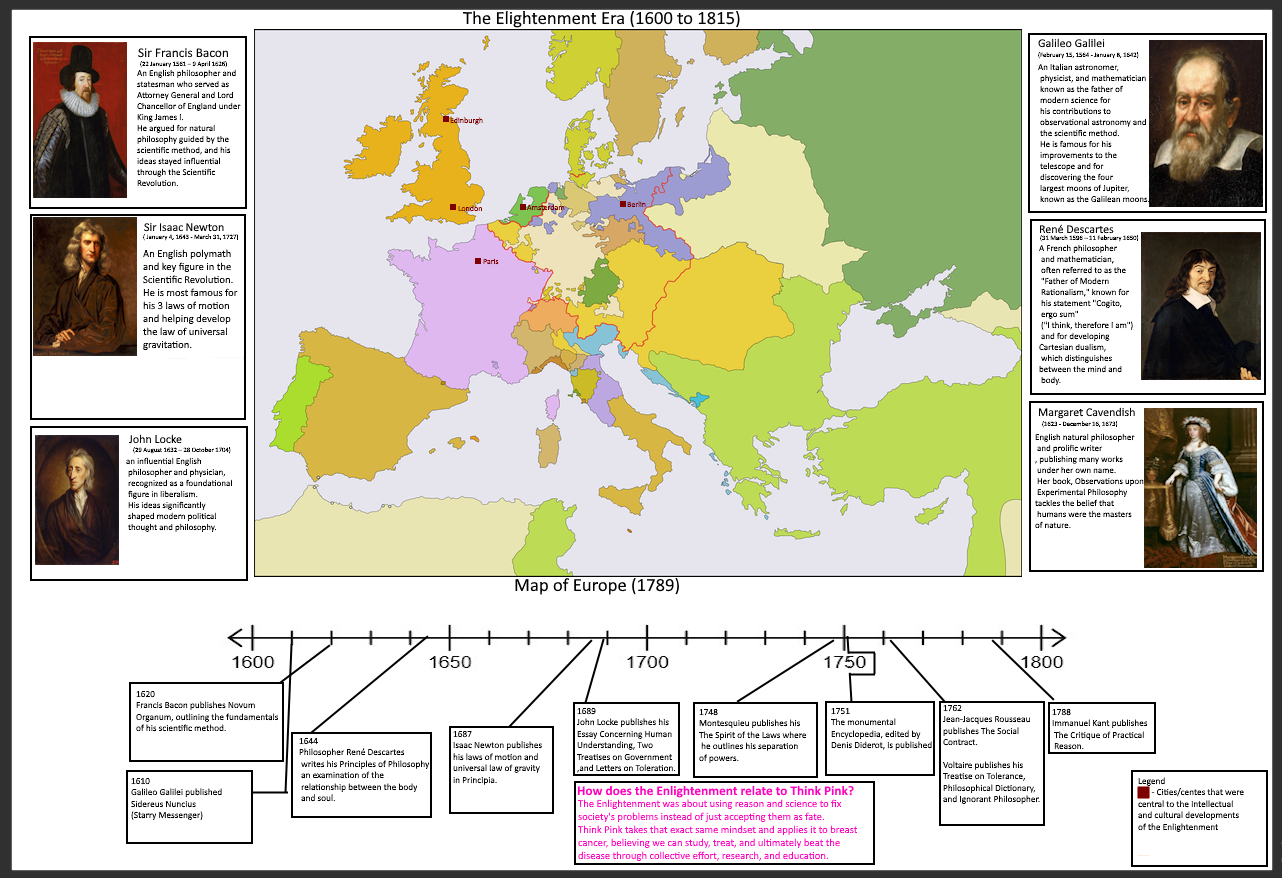
Enlightenment Social Network and Map
News Report:
Community Helper Interview:
Student Name: Mina Amgad
Class: Grade 11
Date of Interview: 7/10/2026
Healthcare Professional: Dr. Amgad Mahrous
1. “Why is breast cancer awareness important, especially for young people?”
“It builds early health awareness, helps young people recognize warning signs early, reduces social stigma, and allows them to support family members.”
2. “What are some common risk factors associated with breast cancer?”
“Risk factors include genetics or family history, increasing age, female gender, hormonal exposure, obesity, physical inactivity, and previous radiation therapy.”
3. “What are the early warning signs that people should be aware of?”
“A painless lump in the breast or armpit, changes in breast shape or size, dimpling or puckering of the skin, nipple discharge, or persistent pain/redness.”
4. “Why is early detection important in the treatment of breast cancer?”
“Early detection catches the cancer before it spreads, significantly increasing survival rates, reducing the need for aggressive treatments and improving overall recovery outcomes.”
5. “What screening or medical check-ups are recommended for women, and at what age?”
“Monthly self-exams and clinical breast exams are recommended starting in early adulthood. Annual screening mammograms typically begin between ages 40 and 50 or earlier for high-risk individuals.”
6. “How can families, schools, and communities support breast cancer awareness?”
“By hosting educational workshops, organizing fundraising walks or pink ribbon events, sharing accurate health resources, and encouraging open conversations about health.”
7. “What is one important message you would like to share with young people during the Think Pink campaign?”
“Knowledge is power; stay informed about your body, practice self-awareness, and don’t hesitate to consult a doctor if you ever notice unusual changes.”
8. “How has the advancement of medical science changed the way breast cancer is detected and treated compared with the past?”
“Regarding Detection, modern imaging tools like 3D mammograms, MRI, and genetic testing allow early detection long before physical symptoms appear, whereas early detection in the past relied mostly on basic physical exams. In terms of treatment, treatment has shifted from invasive surgeries, like full radical mastectomies, and broad-spectrum chemotherapy toward targeted therapies, immunotherapies, and precise radiation that attack specific cancer cells with fewer side effects.”
Women Who Changed the World:
Marie Curie
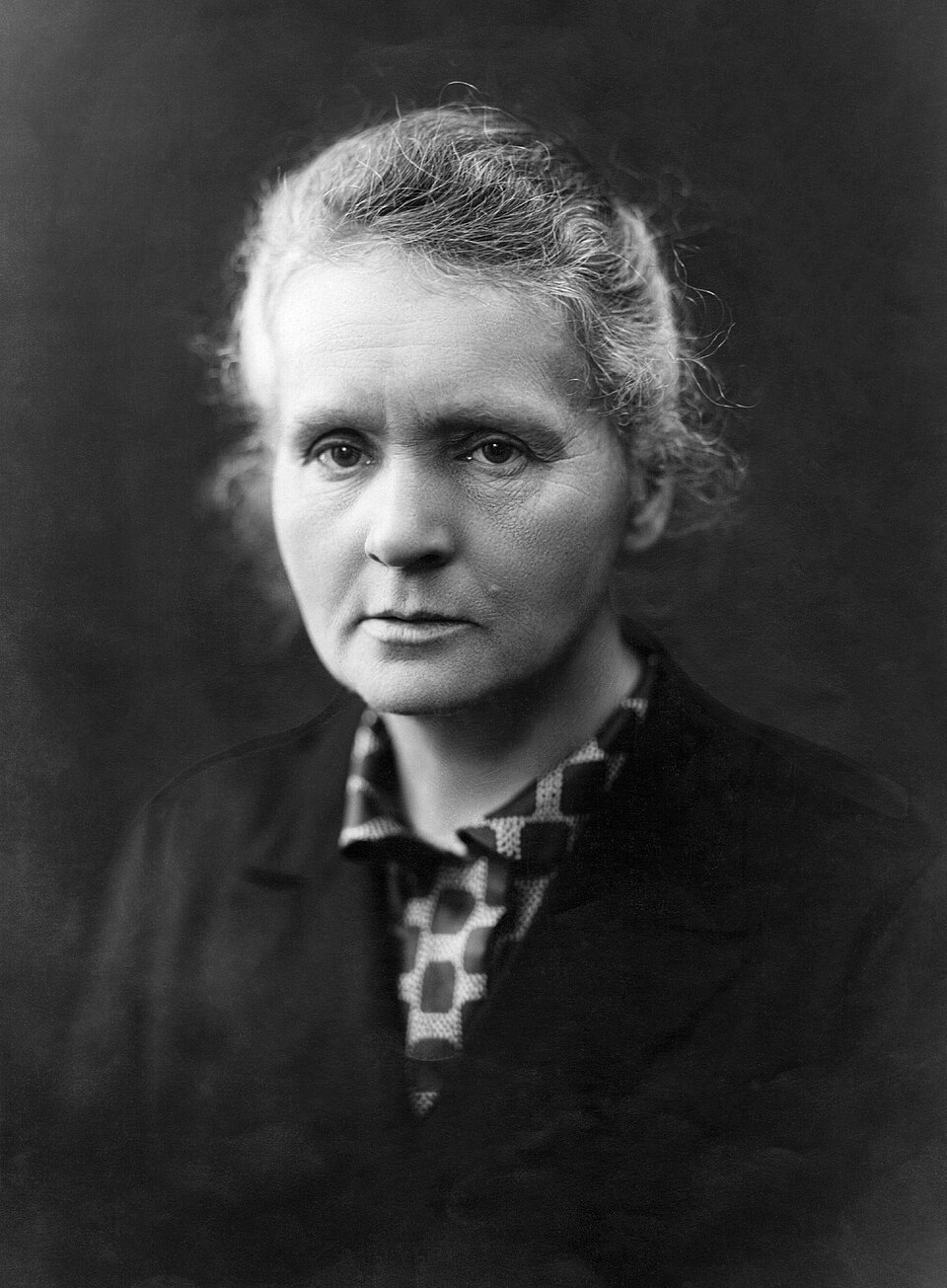
Marie Curie (1867-1934) was a Polish and naturalized-French Scientist in the field of chemistry and physics. She found two of the most important elements. Marie Curie discovered Radium and Polonium, and for her remarkable discovery, her and her husband, Pierre Curie, both won a Nobel Prize for. She was the first person to win one as a woman.
Marie Curie was first to make an idea that radioactivity came from atomic structure, which led to many things, such as x-rays and even radioactive therapies for tumors. However, she unfortunately passed away due to the long exposure of radiation.
Tu Youyou
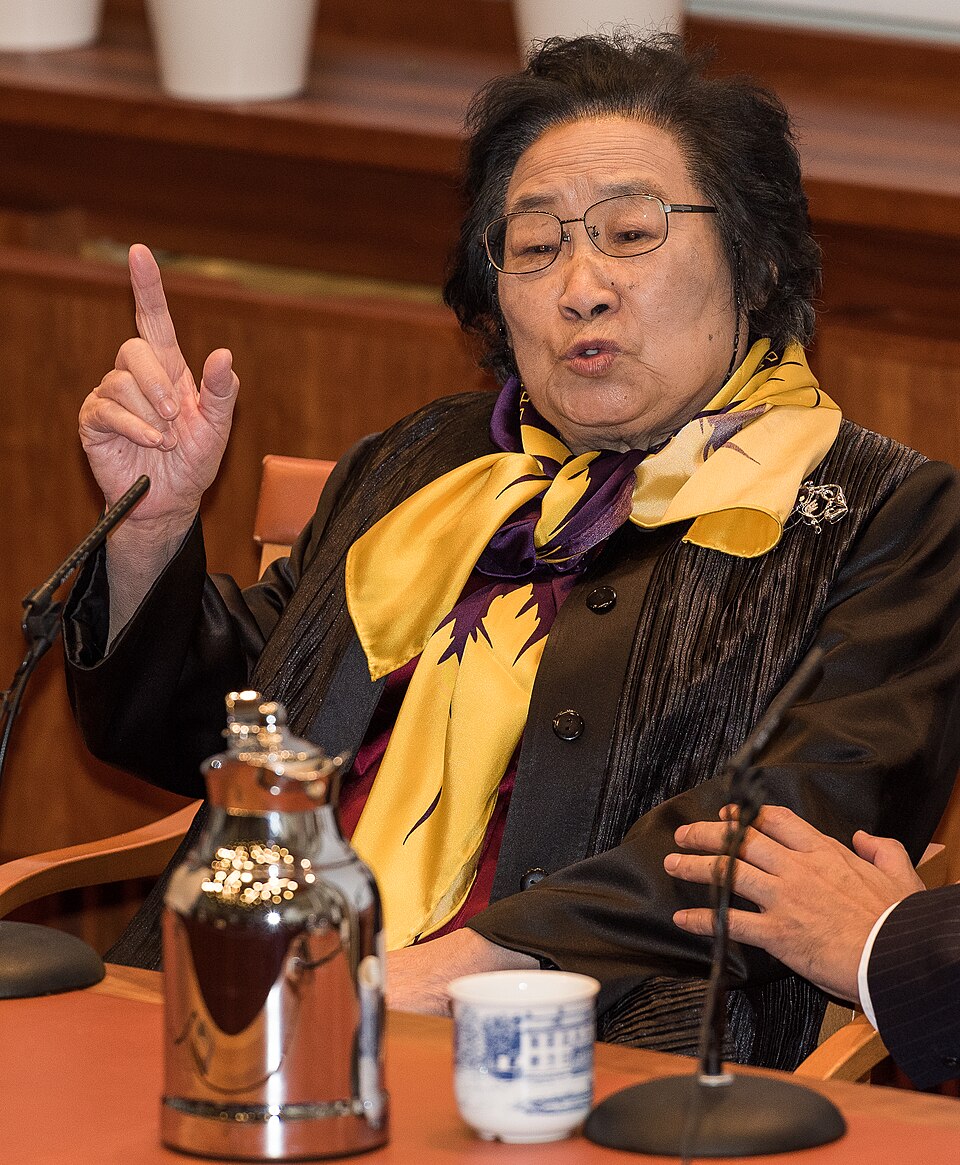
Tu Youyou is a Chinese pharmaceutical chemist. She discovered artemisinin and dihydroartemisinin, which are compounds used to treat malaria. She discovered this through a experiment when analyzing many medicines mentioned in ancient Chinese writings about medicine. One particular thing was effective out of every medicine mentioned in ancient Chinese writings, which was sweet wormwood. Sweet wormwood contains a compound called artemisinin, which was found by Tu Youyou and her team, which can help treat malaria. With that, Tu Youyou won the Nobel Prize in Physiology/Medicine for her brilliant discovery.
Healthy Habit Showcase:
| Name | Age |
|---|---|
| 1. Eat a balanced meal | You should have some protein, like meats or tofu, some carbohydrates, like rice, some fiber, like vegetables, and healthy fats, like olive oil. |
| 2. Aim for 7 – 9 Hours of sleep | Sleep around 7 – 9 hours of sleep to feel energy and to function physically and mentally. But the amount of sleep can be differ depending on age, time, etc. |
| 3. Exercise Regularly | Move around at least 10,000 steps a day or for 30–45 minutes to keep the heart pumping and the blood circulating. |
| 4. Never Smoke/Quit Smoking | Do not smoke; it harms you physically, mentally, and even emotionally. It also can lead to problems that are lethal, such as cancer, heart disease, etc. |
| 5. Stay Hydrated | Drink the right amount of water, and drink according to your body weight and the environment (exp: temperature and climate). |
| 6. Manage Stress | Stress leads to many issues that can affect you physically, mentally, and emotionally. Manage stress in ways that help you. If you feel that you cannot manage it well, seek support from family, friends, and even –especially– a therapist. |
| 7. Learn New Things | Keep the brain sharp and active by learning, such as how to play a musical instrument, learn a new language, etc. |
Conclusion:
In conclusion, the Enlightenment was a time of new ideas and thinking that changed how people saw the world. It focused on reason, equality, and freedom, which helped shape modern society. Think Pink is an event that raises awareness about breast cancer and supports those affected by it. The Enlightenment’s ideas about equality and freedom connect to Think Pink because they encourage people to speak openly about health issues, support each other, and fight for equal access to healthcare. By learning from the Enlightenment, we can continue to promote awareness and support for breast cancer today.
Sources:
- Lumen Learning. (2019). The enlightenment | history of western civilization II. Lumenlearning.Com. https://courses.lumenlearning.com/suny-hccc-worldhistory2/chapter/the-enlightenment/
- What is the enlightenment and how did it transform politics? (2021, February 5). Cfr.Org; CFR Education. https://www.cfr.org/education/learn/reading/what-enlightenment-and-how-did-it-transform-politics
- HISTORY.com Editors. (2009, December 16). Enlightenment period: Thinkers & ideas | HISTORY. History.https://www.history.com/articles/enlightenment
- About - think Pink. (2020, October 25). Think Pink. https://www.thinkpinkbahrain.com/about/
- Awareness - think Pink. (2020, October 25). Think Pink. https://www.thinkpinkbahrain.com/awareness/
- Wikipedia Contributors. (2018, November 27). Marie Curie. Wikipedia; Wikimedia Foundation.https://en.wikipedia.org/wiki/Marie_Curie
- Wikipedia Contributors. (2023, October 4). Tu Youyou. Wikipedia; Wikimedia Foundation. https://en.wikipedia.org/wiki/Tu_Youyou